

Francesco Redi
Arezzo
1626 -
Pisa
1698
Francesco Redi was born on February 18, 1626, in Arezzo, Italy. Beginning in 1642, his father was the personal physician of the Grand Duke of Tuscany. Francesco studied at a Jesuit school in Florence. He completed his studies in medicine in Pisa in 1647. After traveling to Rome, Naples, Bologna, Padua, and Venice, he began practicing as a doctor in Florence. From 1657 until 1667, Francesco Redi was a member of the Accademia del Cimento (Academy of Experiment). Redi was named personal physician and director of the ducal apothecary by Grand Duke Ferdinando.
When Cosimo III became the new Grand Duke, Redi retained his position. During his time in this office, he undertook a great number of experiments in order to improve medical and surgical practices.
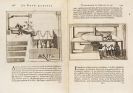
Furthermore he was an active member of "Crusca" and supported the preparation of the Tuscan dictionary. Redi taught the Tuscan language as a "lettore publio di lingua toscana" in Florence in 1666 and was one of the first members of "Arcadia." He also composed many literary works, including his "Letters", the dithyramb "Bacco in Toscana," and "Arianna Inferma." His most famous poetic work, "Bacco in Toscana," first appeared posthumously. It is considered one of the best literary works of the 17th century. In 1668, Francesco Redi published his scientific masterpiece "Experiments on the Origins of Insects," a milestone in the history of modern science.
In this work, Francesco Redi distinguished himself from the traditional research in that he attempted to disprove the theory of abiogenesis (life from inaminate matter) and introduced new methods of experimentation. The famous quote "Omne vivum ex ovo" ("All life comes from an egg") is paradigmatic for his research.
Francesco Redi died on March 1, 1698, in Pisa.

Would you like to sell a work by Francesco Redi?
Infos for seller


Starting bid: 4,500 EUR